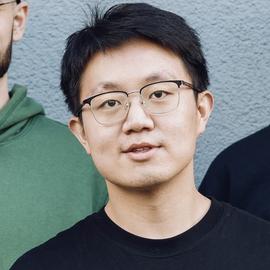
I will join the Department of Electrical and Computer Engineering at the University of Waterloo as an Assistant Professor in January 2027. I am currently completing my PhD at CISPA Helmholtz Center for Information Security, advised by Michael Schwarz.
My research focuses on CPU and system security, including software-based architectural attacks, side channels, and the security of Trusted Execution Environments (TEEs). Several of my findings have led to microcode and firmware updates deployed by major cloud providers and hardware vendors.
In Fall 2024, I was a Research Intern at Google, where I analyzed practical side-channel attacks on Confidential Virtual Machines (CVMs). Before my PhD, I worked as a security researcher at PeckShield.
✨ Recruiting ✨ I am planning to recruit 1–2 PhD students to join my group at the University of Waterloo in Fall 2027. We work on low-level security, such as microarchitecture, OS/kernel, and binary analysis. If you have experience or a strong interest in this area, please email me at ruiyi.zhangjs [at] gmail [dot] com with your CV and a brief description of your research interests and relevant low-level security experience.
- Software-Induced CPU Faults
- Side-channel and Microarchitectural Security
- Confidential Computing
- Program Analysis
PhD Student, 2022-Present
CISPA Helmholtz Center for Information Security
PhD Preparatory Phase, 2021
CISPA Helmholtz Center for Information Security
BSc in Software Engineering (Cybersecurity), 2019
University of Electronic Science and Technology of China, UESTC
Publications



Recent News
[2026.04] Our talk got accepted in Hardwear.io USA 2026!
[2026.01] We reveal StackWarp (CVE-2025-29943)!
[2025.06] Our paper “CacheWarp: Software-based Fault Injection using Selective State Reset” won the Best Hardware and Physics Paper in Cybersecurity Award 2025!
[2024.12] My internship in New York has come to an end. Huge thanks to everyone who made this journey unforgettable!
[2024.11] I proved to my colleagues that I can tell apart Cola Zero / Coca Cola / Diet Coke with just one sip! Sadly, we forgot to record it.
[2024.08] Happy to receive the distinguished artifact reviewers award at USENIX Security'24!
[2024.08] Due to a visa delay, I won’t be able to present our BH’USA talk as planned 😢.
[2024.05] Our briefing application got accepted in Black Hat USA 2024!
[2024.04] I will be a research intern at Google NYC this fall!
[2023.11] After a 7-month embargo, we are excited to publicly disclose CacheWarp (CVE-2023-20592).
CVEs
CVE-2025-54505 - Floating-point divider state sampling on AMD Zen and Zen+ CPUs; a transient-execution issue that can leak data through the floating-point divisor unit.
CVE-2025-52473 - Secret-dependent branching in liboqs HQC when compiled with optimized Clang, enabling secret-key recovery.
CVE-2025-29943 - StackWarp: deterministic stack-pointer manipulation that breaks AMD SEV-SNP guest integrity.
CVE-2024-44067 - GhostWrite: unprivileged arbitrary physical-memory writes on affected T-Head XuanTie RISC-V CPUs.
CVE-2023-20592 - CacheWarp: deterministic memory-write reverts in AMD SEV-ES/SEV-SNP guests by selectively invalidating modified cache lines.
Services
Program Committee
- USENIX Security 2027
- NDSS 2027
- RAID 2026
Artifact Evaluation Committee
- USENIX Security 2024
- USENIX Security 2023